
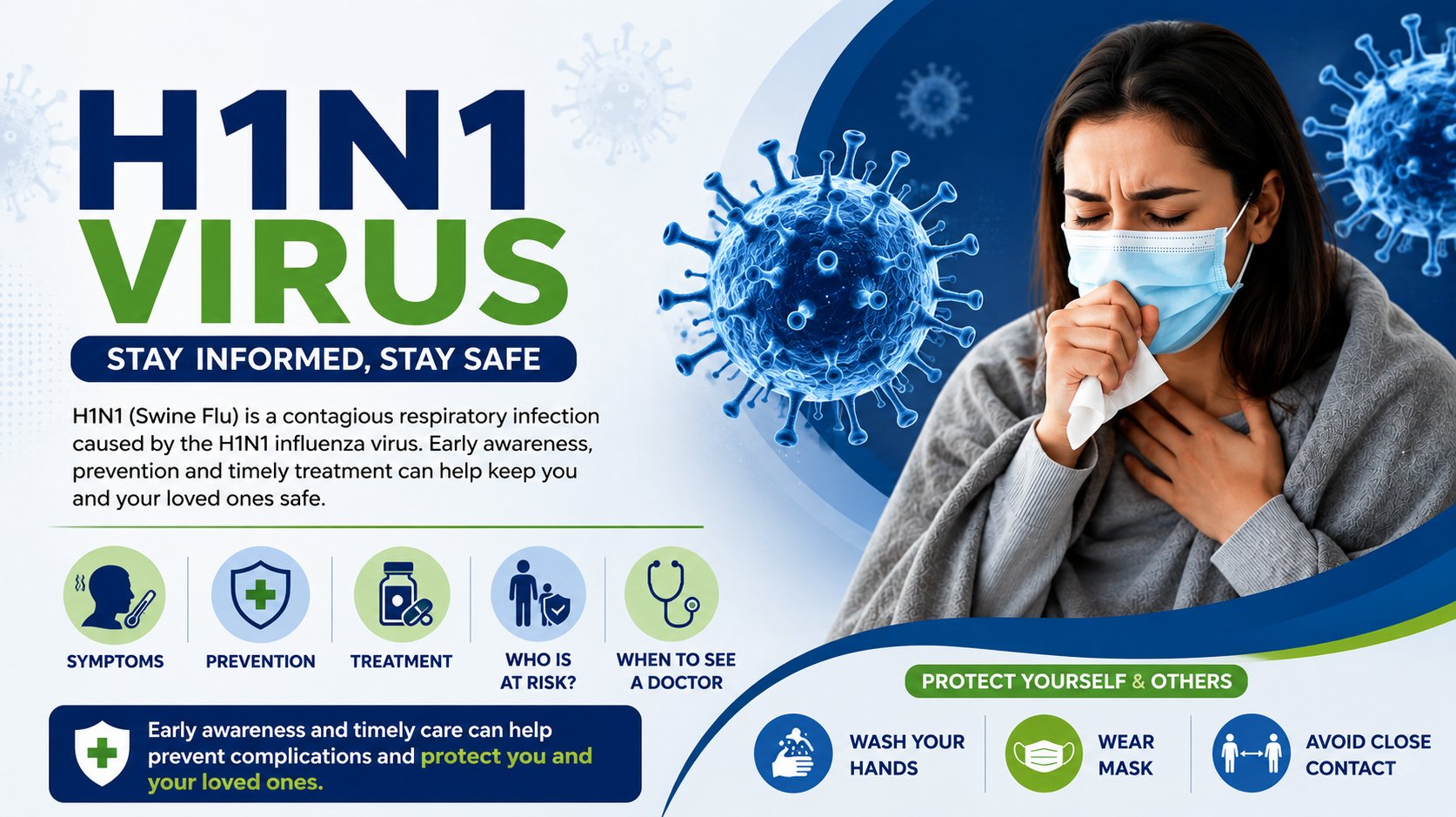
H1N1, commonly known as swine flu, is a type of influenza caused by the H1N1 strain of the influenza A virus. It spreads mainly through respiratory droplets when an infected person coughs, sneezes, or talks. Although many people recover from H1N1 with proper care, it can sometimes lead to serious complications, particularly in young children, older adults, pregnant women, and people with certain underlying health conditions.
Understanding the symptoms, prevention measures, and appropriate treatment of H1N1 can help reduce its spread and protect vulnerable individuals.
What Is H1N1 Virus?
H1N1 is an influenza A virus that can cause respiratory illness. It became widely known during the 2009 H1N1 influenza pandemic. Today, H1N1 is one of the influenza strains that can circulate seasonally along with other influenza viruses.
The infection can range from mild flu-like illness to more severe respiratory complications. Early recognition of symptoms and timely medical advice can help prevent complications.
How Does H1N1 Spread?
H1N1 primarily spreads from person to person through respiratory droplets. Transmission can occur when an infected individual:
- Coughs or sneezes
- Talks or speaks closely with others
- Has close contact with another person
- Touches contaminated surfaces and then touches the mouth, nose, or eyes
People may spread influenza before they realise they are infected, which makes good respiratory hygiene and preventive measures particularly important.
Common Symptoms of H1N1
H1N1 symptoms can be similar to those of seasonal influenza. Common symptoms may include:
- Fever
- Cough
- Sore throat
- Runny or blocked nose
- Headache
- Body aches
- Chills
- Tiredness or weakness
- Sometimes vomiting or diarrhoea, particularly in children
Symptoms may develop relatively suddenly after exposure to the virus.
When Can H1N1 Become Serious?
Most healthy individuals recover without major complications. However, influenza can become more serious in certain people.
Complications may include:
- Pneumonia
- Difficulty breathing
- Worsening of asthma or other respiratory conditions
- Severe dehydration
- Secondary bacterial infections
- Other serious complications in high-risk individuals
Seek medical attention promptly if symptoms become severe or continue to worsen.
Who Is at Higher Risk?
Certain groups have a higher risk of developing complications from influenza, including:
- Young children
- Older adults
- Pregnant women
- People with asthma or chronic lung disease
- People with heart disease
- People with diabetes
- Individuals with weakened immune systems
- People with certain other long-term medical conditions
These individuals should take influenza prevention seriously and seek medical advice early when significant flu-like symptoms develop.
How Can H1N1 Be Prevented?
Prevention plays an important role in reducing influenza transmission. Simple precautions can make a significant difference.
1. Get the Flu Vaccination
Seasonal influenza vaccination is an important preventive measure. The influenza vaccine is updated periodically to provide protection against influenza strains expected to circulate.
Speak with a healthcare professional about whether influenza vaccination is appropriate for you and your family.
2. Wash Your Hands Regularly
Wash your hands thoroughly with soap and water, especially after coughing, sneezing, using public facilities, or returning home from outside.
3. Cover Your Mouth and Nose
Cover your mouth and nose with a tissue or your elbow when coughing or sneezing. Dispose of used tissues properly.
4. Avoid Close Contact When Unwell
If you have flu-like symptoms, avoid unnecessary close contact with others and consider staying home while you are unwell.
5. Avoid Touching Your Face
Try to avoid frequently touching your eyes, nose, and mouth, particularly with unwashed hands.
6. Maintain Good Respiratory Hygiene
Good ventilation, hand hygiene, and appropriate masking in situations where respiratory infections are spreading can help reduce transmission.
Diagnosis of H1N1
A healthcare professional may diagnose influenza based on symptoms, medical history, and physical examination. In certain situations, laboratory testing may be recommended to confirm influenza infection.
Testing may be particularly useful for people who are seriously ill, at higher risk of complications, or being treated in a healthcare setting.
Treatment for H1N1
Treatment depends on the severity of the illness and the individual’s risk factors.
For mild illness, doctors may recommend:
- Adequate rest
- Plenty of fluids
- Fever and symptom management
- Monitoring for worsening symptoms
For people at higher risk or those with severe influenza, a doctor may prescribe antiviral medication. Antiviral treatment is most effective when started early in appropriate patients.
Antibiotics do not treat H1N1 because H1N1 is caused by a virus. Antibiotics may only be prescribed when a bacterial infection is also suspected or confirmed.
Do not self-medicate with antibiotics or antiviral medicines. Always consult a qualified healthcare professional.
When Should You Consult a Doctor?
You should seek medical attention if flu-like symptoms are severe, worsening, or causing concern.
Urgent medical evaluation may be required if there is:
- Difficulty breathing
- Chest pain or pressure
- Persistent or worsening fever
- Severe weakness or confusion
- Bluish lips or face
- Signs of dehydration
- Symptoms that improve and then suddenly become worse
Children, elderly individuals, pregnant women, and people with chronic health conditions should receive medical advice early when significant influenza symptoms develop.
H1N1 Prevention: Awareness Matters
H1N1 can often be prevented or its spread reduced through vaccination, good hand hygiene, respiratory etiquette, avoiding close contact when sick, and timely medical care.
Being aware of symptoms is equally important. Early consultation can help doctors assess the severity of the infection and determine whether antiviral treatment or further evaluation is required.
Conclusion
H1N1 is an influenza virus that can cause anything from a mild respiratory illness to serious complications. Recognising symptoms early, following appropriate preventive measures, and seeking timely medical advice can help protect you and your family.
If you or a family member develops persistent or severe flu-like symptoms, consult a healthcare professional rather than relying on self-medication.
Navin Hospitals, Greater Noida, provides comprehensive healthcare services with a focus on timely diagnosis, appropriate treatment, and patient care. For concerns related to H1N1, influenza, fever, respiratory symptoms, or other health conditions, consult our medical team for appropriate guidance.
Frequently Asked Questions About H1N1
Is H1N1 the same as swine flu?
H1N1 is commonly referred to as swine flu. It is a strain of influenza A virus that can cause respiratory infection in humans.
Can H1N1 spread from one person to another?
Yes. H1N1 can spread mainly through respiratory droplets from an infected person, particularly during coughing, sneezing, and close contact.
Can H1N1 be prevented?
The risk can be reduced through seasonal influenza vaccination, good hand hygiene, respiratory etiquette, avoiding close contact with people who are sick, and staying home when unwell.
Does H1N1 require antibiotics?
No. Antibiotics do not treat viral infections such as H1N1. They may be used only when a bacterial infection is also present or suspected.
When should I see a doctor for H1N1 symptoms?
Seek medical advice if symptoms are severe, worsening, persistent, or accompanied by breathing difficulty, chest pain, severe weakness, dehydration, or other concerning symptoms.
